Surviving Ebola in Butembo: A Local Doctor's Account
Dr Raymond Kasereka Kamwanga describes his 13-day treatment, the stigma he faced after recovery, and the ongoing challenges in the North Kivu province.
By Andres Henderson ·
Dr Raymond Kasereka Kamwanga is writing a book about his survival from an Ebola infection he contracted in July.
The 30-year-old doctor works at Katwa Hospital in Butembo, a city in North Kivu province that serves as the epicentre of the current outbreak in the Democratic Republic of Congo. According to the Congolese health ministry, the region reports the highest number of cases. The World Health Organization declared the outbreak a public health emergency of international concern two months before Kamwanga became ill. Since then, 11,000 people have been infected and 5,400 have died, making it the second-most deadly outbreak on record.
Kamwanga believes he caught the Bundibugyo strain of the virus from a patient during a time when protective measures were insufficient. His initial symptoms included a bitter taste in his mouth, headaches, and general malaise. Butembo lacks equipment to test for Ebola immediately. Samples must be sent to Beni, a city 54km north. Poor road conditions mean the journey takes between 48 and 72 hours, delaying diagnosis. By the fourth day of his illness, Kamwanga was vomiting and had diarrhoea. He then gathered his family to inform them he was going to the treatment centre. His 50-year-old mother, Masika Ndungo, and his sisters cried. His mother asked why he was choosing to die at the centre, which the family called a death house because late-stage patients rarely recover.
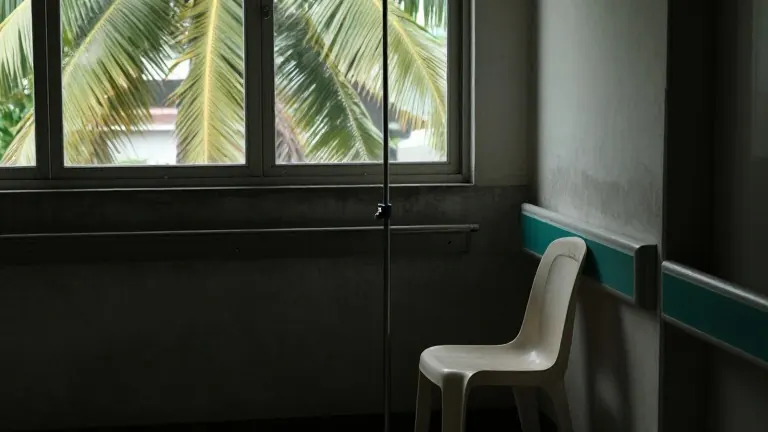
At 18:00, Kamwanga walked to the centre. He avoided the main entrance and had colleagues approach him in full protective gear. Doctors treated his symptoms, which included severe vomiting and diarrhoea. He spent 13 days in a hospital bed, struggling to stay hydrated and watching patients die nearby. He kept his spirits up by watching movies and reading on his phone. The treatment is symptomatic, as no approved vaccine or cure exists for this strain of the virus. Kamwanga was discharged with a certificate proving he was free of the virus.
Despite his medical clearance, fear kept his family at a distance. For 21 days, the incubation period, Kamwanga lived separately in a different part of the family home. At the time, the house held at least 18 people, including children and those displaced by local fighting. Neighbours also stayed away. Kavugho Sifa, a neighbour, said the community prayed for his safety and was relieved to see him return in good health. Ndungo said the experience helped dispel local misconceptions that Ebola was not a real disease.
Since recovering, Kamwanga has engaged in community outreach to combat rumours. He distributes photos taken during his illness to show residents that the disease is real. He began writing his book, titled The Price of Saving Lives, one week after leaving the hospital. He uses a draft of the text during awareness sessions. Some residents view these campaigns as a way for humanitarian groups to secure donor funding. Others suspect healthcare workers are being paid to spread information.
Kamwanga receives death threats on his phone. He says outreach workers have been attacked by community members. He cites a recent report by Médecins Sans Frontières (MSF) claiming that funds allocated to the Ebola response are being misappropriated. He also notes a shortage of protective equipment. The Congolese government has not yet responded to a request for comment from the BBC.
Kamwanga says the government is taking the situation lightly. He believes the war and poverty in the region make it hard for people to trust authorities. He continues his outreach work with the limited resources available.