Abdul El-Sayed's Senate Win Challenges Deep-Rooted Islamophobia
The Michigan senator-elect’s victory over a heavily funded opponent marks a significant shift in American politics, offering a humanistic alternative to partisan divides.
By Andres Henderson ·
The recent congressional elections resulted in a decisive shift in power, with Democrats reclaiming their majorities in a sweep described by analysts as a political earthquake. While media coverage used terms like rout and shellacking to describe the outcome, one victory stood out for its symbolic and political significance. Abdul El-Sayed defeated Mike Rogers, a candidate backed by Donald Trump and supported by approximately 169 million dollars in outside spending from Republican super PACs linked to Trump and Elon Musk.
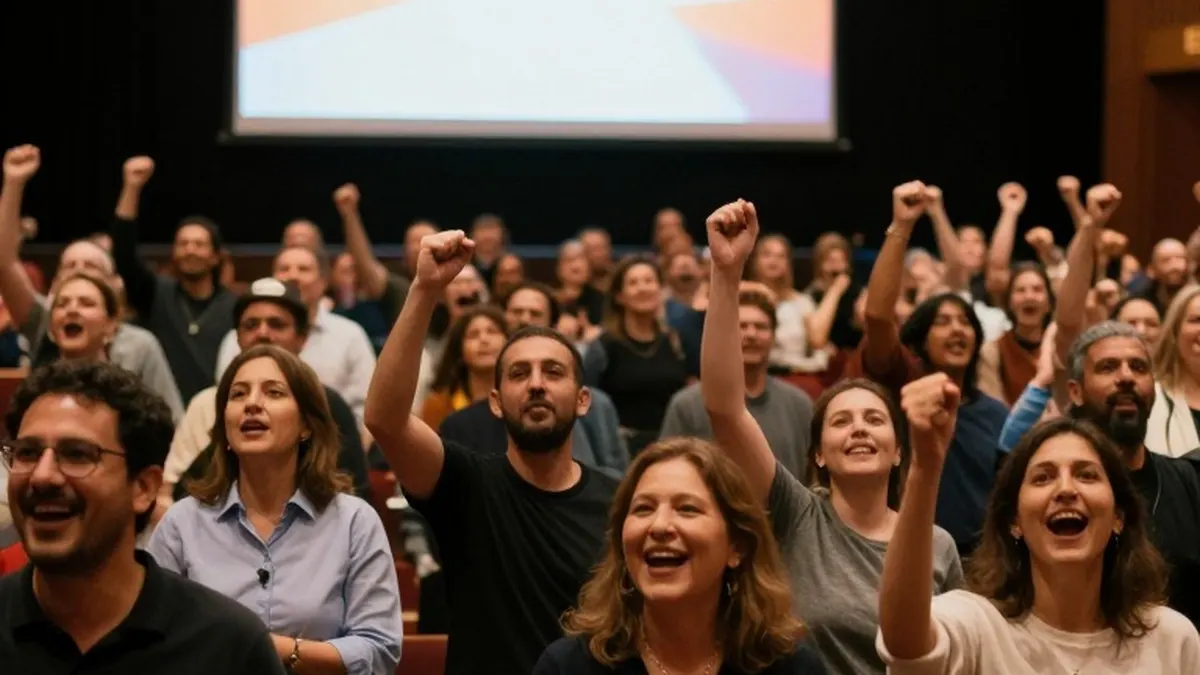
El-Sayed’s win secures his place as the first Muslim to serve on the floor of the United States Senate. His victory speech was marked by a distinct sense of joy and a clear vision for American policy. Addressing the crowd in Michigan, he emphasized the need to spend tax dollars locally on schools, healthcare, and infrastructure rather than on foreign wars. He stated that Michiganders wanted their money used for domestic needs, not for actions like apartheid or genocide.
The senator-elect made a point of introducing himself by his full name, Abdulrahman Mohamed El-Sayed, reclaiming the identity that right-wing opponents had used to label him a terrorist or a danger to the public. He joked that after his inauguration, President Trump could simply call him Senator. The audience responded with enthusiastic chants of his name and the phrase Alhamdulillah, which he explained to the crowd means praise be to God.
This moment highlighted a broader trend in organized anti-Muslim prejudice that had been promoted through social media, legislation, and congressional caucuses. The Center for the Study of Organized Hate documented that 89 Republican elected officials participated in a coordinated campaign over thirteen months. This included the introduction of eight Sharia-related bills and the growth of the Sharia-Free America Caucus to 62 members by April 2026.
Political advisers had previously suggested that a Muslim candidate with a Middle Eastern name was unelectable, assuming that anti-Muslim bias was a fixed grassroots sentiment. In reality, the prejudice was often cultivated with funding from billionaire donors. El-Sayed rejected the narrative that he was foreign, instead presenting himself as a Midwesterner, a doctor, and a public health official who had helped provide glasses to 16,000 low-income children in Detroit and Wayne County.
He positioned his faith within the broader context of American religious traditions, often comparing Islam to Judaism and Christianity. In one campaign video, he participated in a Rosh Hashanah dinner, demonstrating his comfort with interfaith connections. He also produced advertisements that framed his faith as a source of hope and the ability to fix things, challenging the notion that religious identity was a liability.
El-Sayed’s campaign focused on the connection between economic struggles and foreign policy. He argued that it should not be difficult to buy groceries or see a doctor in the richest country in the world if tax dollars are being spent on foreign conflicts. His message resonated with voters who felt the impact of war spending on their daily lives, offering a vision of an America built on diversity, unity, and community care.
The victory serves as a significant challenge to the politics of Islamophobia that has been used to stir fear in American elections. It forces the Democratic party to consider whether to champion a new, more inclusive politics or continue relying on donors who promote exclusionary narratives. El-Sayed closed his speech by calling for an America that belongs to all its children, urging Michigan to help build that future.