
Civic Data: A Spotify-Style Recap for 311 Calls
A CUNY PhD student built a free tool that turns municipal complaint data into shareable graphics, aiming to make city engagement less opaque.
By Andres Henderson ·
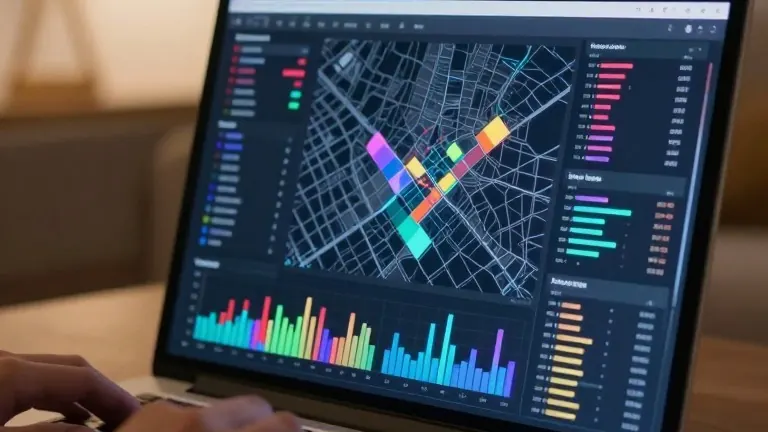
Khaled Eltokhy, a 30-year-old economics doctoral student at CUNY, has released a free website that converts New York City’s 311 complaint data into a visual year-end review modeled after Spotify Wrapped. The tool allows residents to input their zip code and receive a 16-slide presentation detailing the volume, types, and timing of local municipal calls over the past year.
Eltokhy developed the platform after discovering a dataset on the NYC Open Data portal. He utilized AI coding assistants to build the site, a decision that has drawn recent criticism from some online users who label the project "slop" amid growing concerns over artificial intelligence usage. Eltokhy acknowledged the feedback but noted that AI assistance was necessary for him to produce the tool while working a job.
The interface presents specific metrics for each neighborhood. In Greenpoint, for example, residents filed over 27,000 complaints between January and October, averaging one every 16 minutes. The site identifies the most common issue types, the busiest hours, and the locations generating the highest call volumes. It also compares each neighborhood’s profile with similar areas across the city.
The data often reveals underlying tensions in specific communities. In Forest Hills, noise complaints related to Forest Hills Stadium dominate the report, reflecting ongoing disputes between residents and concert organizers. In Flatbush, heat and hot water problems account for nearly one in seven calls. This statistic aligns with a April report by City Limits, which found that housing officials closed tens of thousands of no-heat complaints, many in Flatbush, without conducting inspections.
Eltokhy views the 311 system as a direct mechanism for democratic engagement, particularly for non-voters like himself. He grew up in Egypt during the Arab Spring and has since viewed civic participation as a core component of community life. He stated that many American friends do not appreciate the rarity of having a direct relationship with local government.
The latest version of the tool has expanded beyond New York City to include data from Chicago, San Francisco, Austin, Philadelphia, and Boston. Eltokhy has also created several other data-driven projects, including a live map of construction cranes based on permit records and a game called Guess The Salary that displays city employee compensation. He described the salary game as depressing, which led him to stop expanding it.
While some users have embraced the project, others have criticized the reliance on AI, especially as the official 311 app promotes its own AI-powered smart search feature. Eltokhy has expressed hope that the City of New York will collaborate with him to integrate the tool into its official systems. He aims for the project to encourage residents to monitor neighborhood issues and maintain active engagement with local services.
The tool remains free and accessible via the web. Eltokhy continues to develop new projects that use open data to visualize city operations, citing the need to make complex municipal information understandable for everyday New Yorkers.