
Yemeni Forces Redeploy to Defend Aden as Houthis Take Strategic Coastline
Government troops have withdrawn from the Bab al-Mandab area and Dhubab to consolidate defenses around the provisional capital, while analysts debate the strategic implications of the Houthi advance.
By Luca Fernandez ·
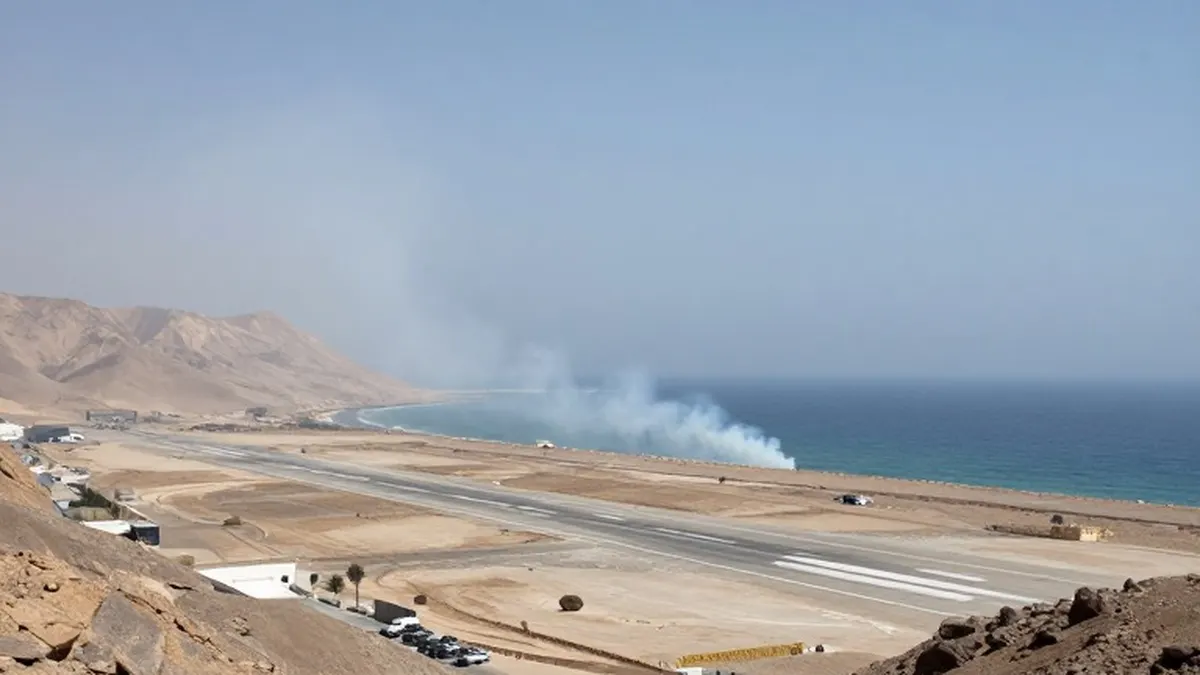
Yemeni government forces announced on November 15 that they are withdrawing troops from the Bab al-Mandab area and Dhubab military airport. The redeployment is intended to secure the provisional capital, Aden, and its neighboring governorates. This strategic shift follows the launch of Operation Fajr al-Yemen in early October, which was designed to restore state institutions and retake the capital, Sanaa, from the Houthis.
The operation was initiated by Rashad al-Alimi, chairman of the Presidential Leadership Council, one day after Ansar Allah seized significant portions of Taiz governorate and controlled all entrances to Taiz city. Despite the official launch, government forces have not made substantial progress on the ground. Instead, the Houthis have continued to expand their territory in both Taiz and Lahij governorates in Yemen's southwest.
Prior to the withdrawal, intense fighting occurred in the Dhubab district on the west coast. Government forces held the Dhubab military airport and surrounding zones, but Houthi units were advancing through the mountains and valleys of Lahij. They were on the verge of besieging military positions along the coast. The recent retreat has allowed the Houthis to advance into all previously held government areas, bringing them to within approximately 70 kilometers of Aden's northern entrance.
The latest developments have granted the Houthis control over roughly 60 kilometers of coastline along the Gulf of Aden. This stretch extends from Bab al-Mandab towards Aden governorate and includes the coastal area of Khour Omaira. As government forces regroup to defend Aden, the strategic balance in the region has shifted significantly in favor of the rebel group.
Professor Abdulsattar al-Shamiri, a Yemeni political analyst and CEO of the Johood Center for Studies and Research, views the withdrawals as a matter of battlefield management. He noted that the government failed to close gaps early, allowing the Houthis to outflank and besiege forces that had advanced toward Dhubab. Al-Shamiri described the situation as an inability to manage the battle and control the ground through collective management and coordination among all military units.
The analyst further highlighted clear logistical shortcomings, such as the failure to rapidly supply food and ammunition to small units stationed in the mountains. These units were forced to withdraw when they ran out of supplies. He also pointed to the failure in the Tur al-Baha military axis, which pulled out from vast areas in the countryside of Taiz. This collapse caused confusion among forces on the west coast and other units attempting to fill the resulting gap.
Regarding the possibility of a Houthi advance toward Aden, Al-Shamiri suggested that while such an operation is not impossible, it would be difficult due to air cover. He stated that the probability of advancing toward Aden is very low at this stage. He added that reorganizing the theatre of operations could allow government forces to launch offensives on other fronts and shift from a defensive to an offensive posture.
Professor Mansour al-Muntasir, another Yemeni political analyst, agreed that the developments point to shortcomings in government military planning. He noted that most of the forces withdrawing from the coast are from southern governorates. Some southern activists have supported this move, arguing that these troops should focus on defending the south, effectively leaving governorates north of Aden to the Houthis and northern fighters. However, Muntasir believes this is not the sole reason for the withdrawal, citing divisions and poor coordination among the adversaries as primary factors.
Muntasir estimated that the Houthis may exploit their control over strategic areas to consolidate their influence in Bab al-Mandab while keeping the option of advancing toward Aden open. He warned that the continued fragmentation of government and southern forces may grant them additional opportunities to expand their territory.
The conflict has also triggered a significant humanitarian crisis. The International Organization for Migration reported that 347,321 people were displaced between August 1 and November 14. Additionally, 18,780 people were displaced between November 8 and 14. The United Nations High Commissioner for Refugees warned that nearly 9,600 displaced people face increasing risks as fighting draws closer to the Kharaz Refugee Camp in Lahij governorate. Before the latest escalation, Yemen already had 5.2 million internally displaced people, out of a total of 22.3 million in need of humanitarian assistance.