Uber and Zipline Begin Drone Food Delivery in Spring, Texas
A new autonomous drone service is launching in a Houston suburb, offering tethered package drops for local and national restaurant partners.
By Luca Fernandez ·
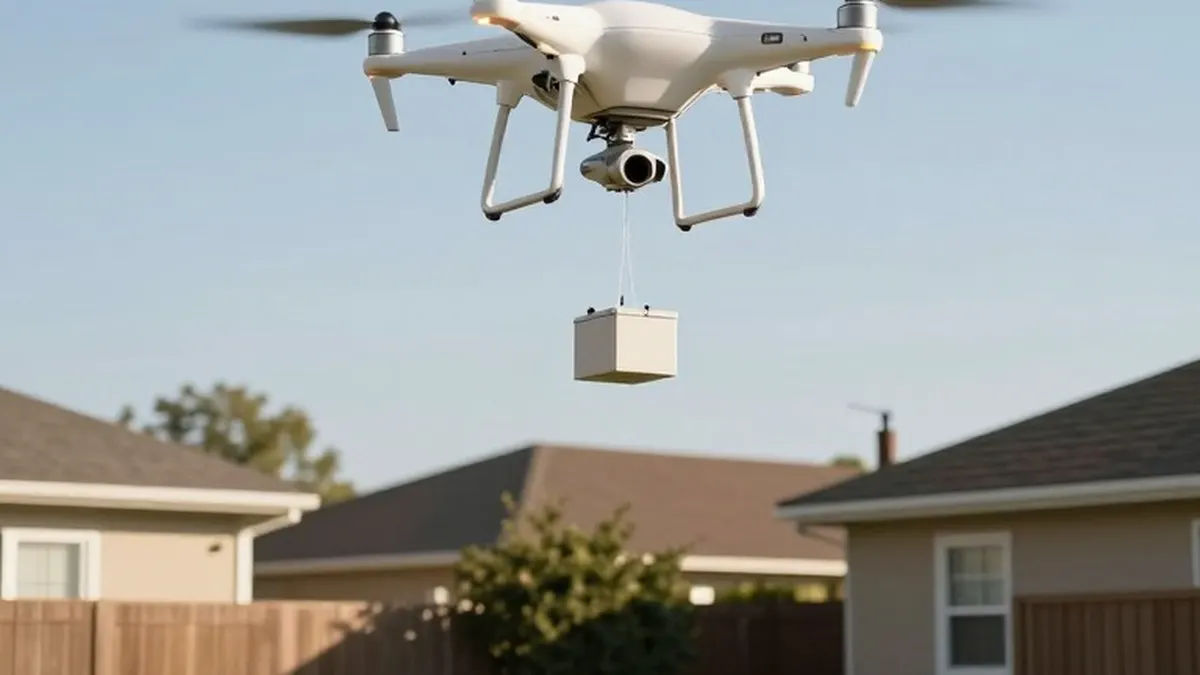
Uber has officially launched its drone delivery service in partnership with Zipline, with the initial rollout taking place in Spring, a suburb of Houston, Texas. The service began operations this week, marking a significant step in the expansion of autonomous food delivery in the United States. Following this first deployment, Dallas is expected to be the next city to receive the service, with plans to extend coverage to dozens of other US cities in the coming years.
The collaboration between the two companies was first announced in August 2026, which also included an investment by Uber in Zipline. The partnership is driven by an ambitious long-term goal to achieve one million drone deliveries per day by the end of 2029. While this target is considered aggressive, it reflects the growing role of aerial logistics in modern urban infrastructure.
Residents within the coverage area in Spring can access the new service through the Uber application. A dedicated icon labeled Drone appears on the home screen, allowing users to browse a selection of participating restaurants. The current menu includes national chains such as Jersey Mike’s and Zaxby’s, as well as dozens of local Houston-area favorites like Urban Bird and Abu Omar Halal. Orders are fulfilled by lowering tethered pods into customers' yards.
The user experience is designed to be straightforward and fully autonomous. During checkout, customers must confirm that they have a clear drop-off zone available in their yard. Once the order is accepted, the app provides real-time tracking of the drone. Because the system operates without human intervention for the final delivery, the option to leave a tip is disabled, although customers can still rate the overall experience.
The technology utilized by Zipline differs significantly from other low-hovering delivery drones. Their aircraft cruise at altitudes exceeding 300 feet and can reach speeds of up to 70 miles per hour. Rather than hovering directly above the customer, the drone hovers overhead and lowers a delivery pod via a tether. The aircraft dynamically calculate flight paths based on factors such as wind, altitude, and speed, adjusting their pitch to accelerate or brake quietly. The drones are engineered to operate in rain and other poor weather conditions, capable of carrying up to 8 pounds of cargo within a 10-mile radius of the restaurant.
Initially, the service will operate daily from 8 AM to 10 PM. This schedule allows for a substantial window of availability for customers seeking convenient meal delivery. The integration of this high-speed, high-altitude delivery method aims to provide a faster and more reliable option compared to traditional ground-based services.
The current scale of Zipline’s operations globally averages roughly one delivery every 20 seconds, which translates to approximately 4,300 deliveries per day. Reaching the one million daily target by 2029 will require a significant increase in capacity and geographic reach. Despite the steep growth curve, the adoption of delivery drones is becoming increasingly common in many US communities.
This launch places Uber in direct competition with other major players in the drone delivery space, including Amazon Prime Air and Wing, which is backed by Google. As these technologies become more refined and widely accepted, the landscape of food and package delivery continues to evolve, offering consumers new options for receiving goods quickly and efficiently.
More News · National news · Report a business · Got a Story?