Trump Unveils Critical Minerals Deals as Quad Leaders Meet in Manila
The leaders of the United States, India, Australia and Japan agreed on steps to secure supplies of critical minerals during a Quad meeting on the sidelines of Trump's Asia tour.
By Andres Henderson ·
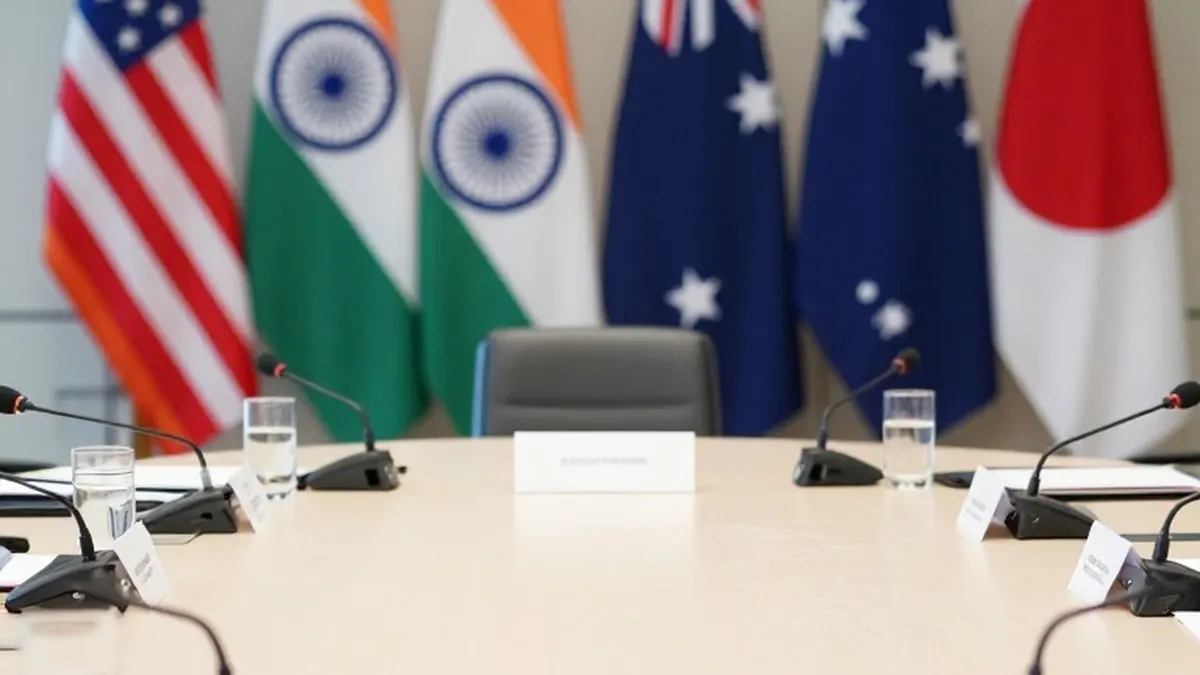
United States President Donald Trump has announced that the Quad, a security grouping linking Washington with three Indo-Pacific partners, has reached agreements aimed at securing supply chains for critical minerals.
Trump sat down with Indian Prime Minister Narendra Modi, Australian Prime Minister Anthony Albanese and Japanese Prime Minister Sanae Takaichi in the Philippines on Thursday. Speaking before the talks in Manila, he described the four members as "the four corners of a free, open, stable, and prosperous Indo-Pacific."
Trump told the meeting that the minerals agreements were designed to prevent "coercion by any single foreign supplier." He stopped short of naming China, which dominates global rare earth supplies, but later predicted the US would have "everything we need" on rare earths within 10 months. "We are making rare earth at a level that we've never made before. We're going to catch them [China] within 10 months," he said.
China imposed restrictions on rare earth exports last year during a trade dispute with Washington, before the two sides reached a deal in June intended to restore American access to those supplies. In a statement issued after the leaders' meeting, the Quad voiced "grave concerns" about "economic coercion," including the use of arbitrary export restrictions. No country was named, but the US and Japan have repeatedly complained about Chinese curbs on rare earths, which are essential to manufacturing products ranging from electric cars to mobile phones. Beijing has effectively halted exports of key critical minerals to Japan for nearly a year as ties between Asia's two largest economies have deteriorated.
The gathering marked Trump's first meeting with the Quad, a bloc his predecessor Joe Biden had treated as a signature foreign policy initiative. Scott Lucas, professor of international politics at the Clinton Institute at University College Dublin, told Al Jazeera the talks suggested the group retained a "functioning relationship." "Given the damage to the Quad during the Trump administration, including the instability caused by Trump's tariffs on India, and India's response by diversifying, the Quad meeting and statements like this give reassurance that there is still a functioning relationship," Lucas said. "I'm not sure I'd call it an alliance, as I don't think the Trump folks believe in alliances."
Trump also took part in a summit of the Association of Southeast Asian Nations in Manila on the opening day of a three-day trip to Asia. From the Philippines, he is due to travel to China for the Asia-Pacific Economic Cooperation forum in Shenzhen, where he is expected to join a trilateral meeting with Russian President Vladimir Putin and Chinese President Xi Jinping on Thursday.
China's Ministry of Foreign Affairs said those talks would address topics of "groundbreaking significance," among them "safeguarding world peace."
Asked by reporters about a CNN report claiming US intelligence had concluded Tehran was drawing up plans to use a so-called dirty bomb against officials in his administration, Trump said he was "looking into it." He warned that if Iran posed an "imminent threat" to Washington, "they will pay a price the likes of which no country has ever paid before." He added that he "hoped" Iran posed no threat but took the scenario "very seriously" because "they happen to be crazy."
Iranian Foreign Ministry spokesperson Esmaeil Baghei rejected the reporting in a post on X, writing: "Those who initiated the aggression against Iran are now seeking to lay the media groundwork for their sinister designs by manufacturing and disseminating baseless allegations, including the recent claims published by The New York Times and the fabricated media narrative surrounding an alleged 'dirty bomb' propagated by CNN."