Children in Southern Lebanon Face Ongoing Trauma Amidst Conflict
Two months after a devastating strike in Kfar Reman, survivors and displaced children in southern Lebanon continue to face trauma, poverty, and ongoing military activity.
By Idris Ricci ·
In the village of Kfar Reman in southern Lebanon, the aftermath of a significant Israeli air strike remains visible months after the attack. On the morning of September 7, bulldozers worked through the rubble of a destroyed home, searching for the bodies of two children. By that point, ten members of the same family, spanning three generations, had already been recovered from the collapsed structure, including two survivors who were thrown from the house by the force of the blast.
Two months later, ten-year-old Zainab and her eight-year-old brother Mustafa were living with their grandmother. The siblings had lost their parents, their elder sister Fatima, and their one-month-old brother Ahmed in the attack. While Zainab maintained a constant smile, she struggled to express the sadness she carried. Mustafa, however, appeared less reserved and expressed anger toward Israel. Speaking directly to a camera, he stated that the conflict had taken his home and parents, leaving him without peace.
The impact on the region’s youngest residents has been extensive. According to the United Nations, more than a thousand children were injured in Israeli attacks between March and August of this year. In addition to injuries, more than 260 children were killed during that period. This statistic averages out to seven children being killed or injured every day, a rate nearly double that observed at the start of the recurring conflict between Hezbollah and Israel in late 2023.
Journalists and observers have repeatedly documented the personal effects of the war, filming children’s clothing, toys, and schoolbooks amid the debris of destroyed homes. Funerals for children killed alongside their parents have become a frequent sight. Those who survive often display signs of trauma and report living in a state of constant fear.
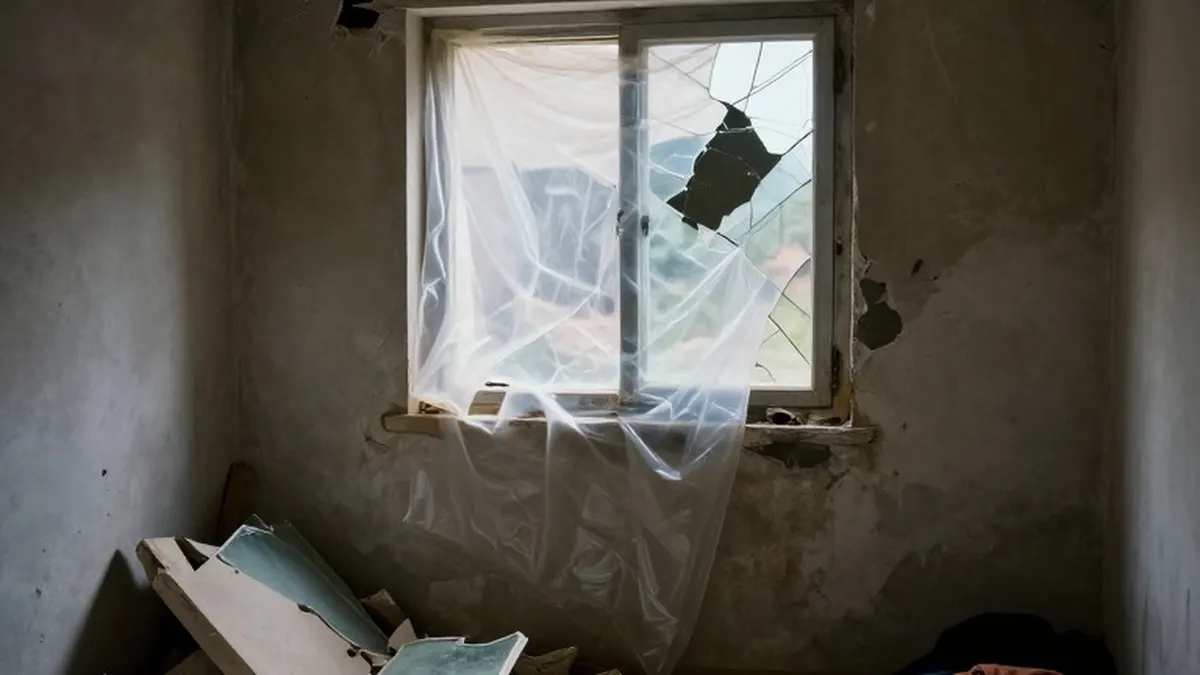
In the village of Tibnine, located near the northern edge of the area occupied by the Israeli army, an eleven-year-old girl named Bannine guided visitors to the second floor of an orphanage. She showed them the damage caused by a nearby air strike, pointing out rooms filled with debris and broken glass. Stuffed animals and clothes remained scattered on the floors. Bannine noted that she and the other children were not present when the strike occurred.
Despite a reduction in violence in recent months that allowed hundreds of thousands of people to return to their villages, a sense of security remains elusive. Israeli strikes and home demolitions continue in frontline areas. Anaya Sultan, whose father was killed when the conflict escalated earlier in the year, described waking and sleeping to the sounds of bombing, warplanes, and drones. She described her father as her soul and everything to her.
The economic situation in the region is described by Lebanese officials as being in a state of collapse. Recurring conflicts, ruined infrastructure, blocked access to agricultural land, and mass displacement make it difficult for families to sustain themselves. Some children in orphanages are not orphans by blood but are placed there because their parents are too poor to care for them.
The United Nations has identified southern Lebanon, along with impoverished northern and eastern regions like Akkar and Baalbek, as areas of greatest concern for family survival. A joint report from the UN Food and Agriculture Organization, the World Food Programme, and Lebanon’s Ministry of Agriculture indicates that more than one million people, or about 21 percent of the recorded population, are facing crisis levels of acute food insecurity.
Bassima Fawaz, who helps manage the orphanage in Tibnine, explained that many displaced people who previously supported the institution are now struggling on their own. She noted that the building’s windows had to be covered with plastic sheeting due to the high cost of replacing glass shattered by bombardment. She also mentioned that one of the girls in the orphanage was hospitalized with pneumonia, highlighting the ongoing health challenges faced by the residents.