Power shifts in Israel as occupation pressures mount across Gaza and West Bank
Political leadership changes are underway in Israel, yet Palestinians continue to face intense military activity and settler violence in the occupied territories.
By Idris Ricci ·
Israel’s parliamentary landscape is undergoing a significant transformation this week, with the replacement of the Knesset speaker scheduled for Tuesday. This move is one of several indicators that political power is being reconfigured as opposition leader Gadi Eisenkot positions his bloc to form the next government. Despite these internal political maneuvers, the daily realities for Palestinians remain grim, with the machinery of occupation continuing to operate with minimal interruption.
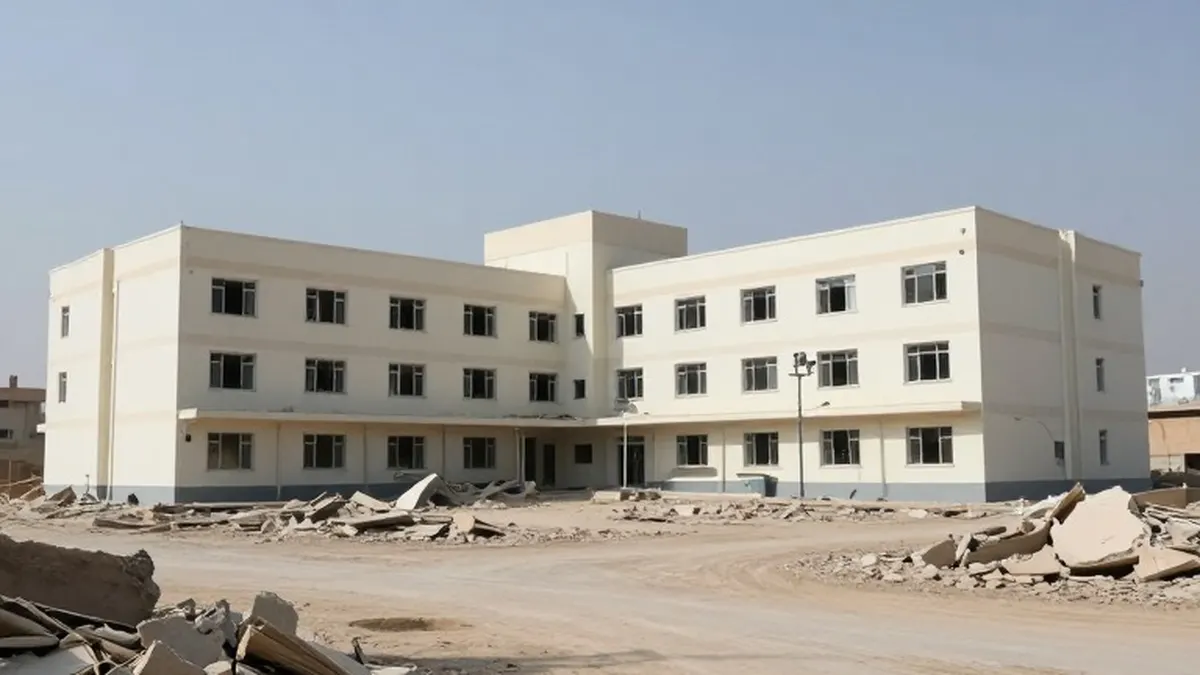
In Gaza, the past week has seen a surge in Israeli military strikes that have claimed the lives of at least 37 people. While the military emphasizes targeting combatants, civilian accounts describe deaths occurring in tents, during water collection, and even while traveling to a wedding photo shoot. Gaza’s Ministry of Health reported that 1,650 Palestinians have been killed since the ceasefire agreement in October 2025. A particularly severe incident occurred on November 12 when a bomb hit the Nasser Medical Complex in Khan Younis. The strike on the surgery building killed six individuals, including surgeon Rizq Abu Shaira, and injured dozens. The Israeli military stated it was targeting Hamas commander Muhammad Abu Ismail, a claim that prompted condemnation from foreign ministers of 18 Arab and Muslim-majority nations.
Further attacks included a drone strike in al-Mawasi on November 14 that killed Samir Abu Younis, identified as the Hamas Rafah Brigade commander. The strike hit a displaced persons tent, wounding two others. In Jabalia camp, separate strikes killed two men and two people at a government security post. Civilian casualties also occurred in Deir el-Balah, where a tank shell hit an apartment building gathering mourners, killing at least three people, including a 12-year-old boy. Other incidents included a man killed by a drone while filling water containers and another driver killed while transporting a groom.
Winter conditions in Gaza have worsened, with the Health Ministry recording the first hypothermia death of the season, a nine-month-old baby. While Israel’s Prime Minister’s Office claims that over 91,000 tents and 8,200 trucks of supplies have been delivered, the United Nations notes that aid truck offloads have dropped by approximately 42 percent following the suspension of the Egyptian corridor. The UK, Australia, Canada, and Italy have described the conditions as catastrophic and urged the entry of 150,000 tents.
In the West Bank, the olive harvest has become the most violent on record, with 410 related attacks logged as of November 9. Settlers have attacked pickers in multiple villages, including Deir Istiya and Abu Nujeim. On November 10, masked settlers injured six volunteers and farmers at Qusra. Arson and vandalism have also increased, with a Bedouin tent burned at Deir Qaddis and a car set ablaze in Taybeh with the slogan “Death to Arabs” spray-painted on it. Closures and raids have further restricted movement, with troops sealing villages and arresting residents during weddings.
Two major settler attacks escalated into pogroms in the past week. On November 10, more than 50 masked settlers attacked al-Lubban Asharqiya, burning over 100 vehicles and causing damage estimated at more than one million shekels. On November 12, settlers in the Atara area smashed homes and a factory, injuring more than 10 residents. Despite army evacuations of outposts in Burqa and Wadi al-Rakhim, settlers have re-established a presence at Burqa. In Wadi al-Rakhim, the siege of Yousef Shanaran’s home continues, with settlers rebuilding their tent after soldiers removed it. Shanaran stated that soldiers were present during the latest stone-throwing incident but took no action, declaring, “We are alone.”
Political tensions are rising as Prime Minister Benjamin Netanyahu addresses the new parliament. In a speech described as hate-filled by Eisenkot, Netanyahu claimed that Arab-led parties seek to destroy the Jewish state. Reports indicate that Netanyahu’s office may have influenced recent arrests of activists from the Ra’am party and sought wiretaps on five Palestinian members of parliament. Eisenkot has labeled this campaign racist and violent, calling Netanyahu a threat to democracy.
Despite ruling out a coalition with Arab parties, which would provide a sufficient majority, Eisenkot appears to be moving toward an alliance with ultra-Orthodox groups. Avigdor Liberman, recently approved as chair of the Foreign Affairs and Defence Committee, suggested working with military and religious leaders to compromise on conscription bills for the ultra-Orthodox. This strategy aims to secure a stable government while managing internal divisions.