Nasdaq-100 Bounce Tests Critical Support After 15% Drop
Technical analysts argue the index’s recovery from the 25,000 level offers a historically favorable buying opportunity, provided it reclaims prior highs.
By Idris Ricci ·
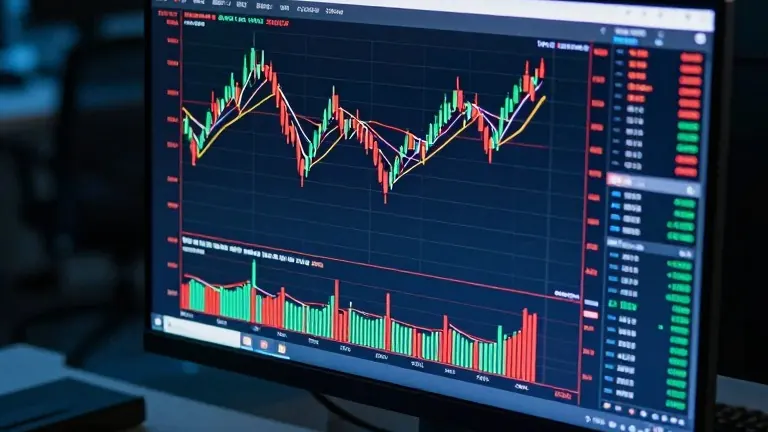
The Nasdaq-100 index has begun to recover after a sharp two-week decline that pushed the benchmark close to its downside target of 26,350. The rebound originated near the 25,000 level, a zone where three distinct technical support lines converged. This specific location is currently drawing attention from technical analysts who are assessing whether the recent dip marks the end of the downward trend or the start of a deeper correction.
The index fell approximately 15 percent from its recent peak. This drop follows a failed breakout from a bullish cup-and-handle pattern in September, which had initially projected an upside target of 33,200. The failure of that pattern led to an aggressive breakdown in the weeks preceding the current bounce.
The 25,000 to 26,000 range acts as a major floor for the index. It combines the uptrend line drawn from the early 2025 low through the early 2026 low, the 38.2 percent Fibonacci retracement of the 2025 to 2026 rally, and former 2025 highs that previously acted as resistance. Frank Cappelleri, founder of CappThesis, noted that this confluence of support encouraged buying activity after the steep decline.
Historical data suggests that buying during drawdowns of 10 to 25 percent has generally resulted in positive returns, even when further losses occurred initially. Only a small number of post-financial crisis declines exceeded 20 percent. Three of those instances, in late 2018, 2020, and April 2025, saw relatively quick reversals. However, the 2022 bear market stands out as the major exception, with the index losing nearly 36 percent over ten months.
The trajectory of the current rally will determine the index's next move. If the bounce fails to reclaim previous highs, it may form a lower high. Additional lower highs would provide stronger evidence of a developing long-term downtrend. This dynamic mirrors the market action in March 2022, where an initial rebound failed to reach prior peaks before a more severe decline followed.
Cappelleri described the current bounce as encouraging given its origin at a major support confluence. He stated that the market does not need to set new records immediately. However, he warned that if the rally faces another wave of strong selling, downside momentum could reignite.
More Business · Customer Complaints · Report a business · Got a Story?