
Leonid meteor shower peaks with high-speed streaks this week
The Leonid meteor shower peaks on the night of November 17 and 18, offering fast-moving meteors and a chance to view a celestial event tied to Comet Tempel-Tuttle.
By Idris Ricci ·
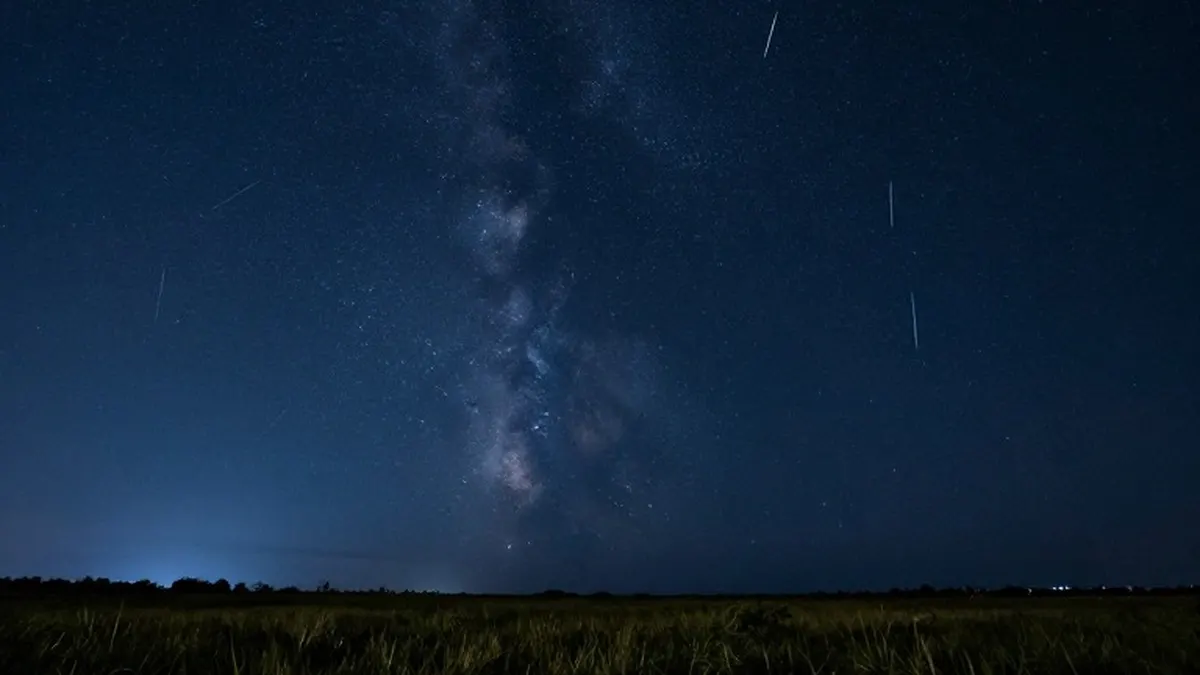
The Leonid meteor shower is set to reach its peak intensity on the night between November 17 and 18, offering skywatchers a view of some of the fastest meteors in the annual calendar. These celestial events occur when Earth passes through a stream of dust left behind by Comet Tempel-Tuttle. The particles, known as meteoroids, enter the atmosphere at roughly 71 kilometers per second, creating bright streaks that can leave glowing trails visible for several seconds.
Meteor showers are not caused by stars but by tiny fragments of space debris burning up as they hit the Earth's atmosphere. Most of this material originates from comets, which are icy bodies that shed dust as they orbit the sun. When Earth's path intersects these dusty trails, the debris heats up and glows, usually disintegrating before it can reach the ground. The Leonids specifically derive from Comet Tempel-Tuttle, a cycle that brings its dust trail across Earth's orbit every November.
The shower is named after the constellation Leo, which serves as the radiant point. This is the location in the sky from which the meteors appear to originate. While this effect is an illusion of perspective, similar to how railway tracks appear to converge in the distance, it helps observers identify the source of the activity. The Leonids are particularly noted for producing fireballs, which are unusually bright meteors resulting from larger debris, and earth-grazers that skim the atmosphere at shallow angles.
One of the most distinctive features of the Leonids is their potential to produce meteor storms. When Comet Tempel-Tuttle passes close to the sun, which occurs approximately every 33 years, it leaves behind a denser trail of debris. If Earth passes through this concentrated section, the shower can intensify into a storm with rates exceeding 1,000 meteors per hour. Historical storms, such as the event over North America in 1833 and the burst in 1966, have helped scientists understand the origins of these phenomena. The most recent storms occurred between 1999 and 2002, with the next close solar approach by the comet expected in 2031.
According to the International Meteor Organization, the Leonids will remain active from November 6 through November 30. The peak activity is forecast for around 23:45 GMT on Tuesday, November 17. Under ideal conditions of clear and dark skies, observers can expect to see up to 15 meteors per hour at the peak. While this rate is lower than other major showers, the high speed of the Leonids makes them visually striking.
The optimal time for viewing is between midnight and dawn. During this period, the constellation Leo rises higher in the sky, making the radiant point more accessible. The moon, which will be in its first quarter phase on the peak night, sets around midnight in many locations. This timing minimizes lunar interference, allowing for darker skies during the best hours of observation.
To maximize the experience, viewers should find a location away from city lights and allow their eyes approximately 20 minutes to adjust to the darkness. The shower is visible from both the Northern and Southern Hemispheres, although conditions are generally more favorable in the north. In the Southern Hemisphere, the best viewing opportunities are in the one or two hours before dawn when the constellation is best positioned.
Although the Leonids are not the most prolific shower, they offer a unique experience compared to others. The Perseids in August can produce around 100 meteors per hour, while the Geminids in December can reach 150 per hour. The Leonids make up for their lower frequency with their exceptional speed and the rare potential for dramatic storms, making them a significant event for astronomy enthusiasts this week.