Israel to conduct daily aid truck screenings at Erez Crossing
A new protocol will see 20 humanitarian vehicles inspected at the Erez Border Crossing each day, a move that has drawn criticism from local residents and officials regarding traffic and security risks.
By Luca Fernandez ·
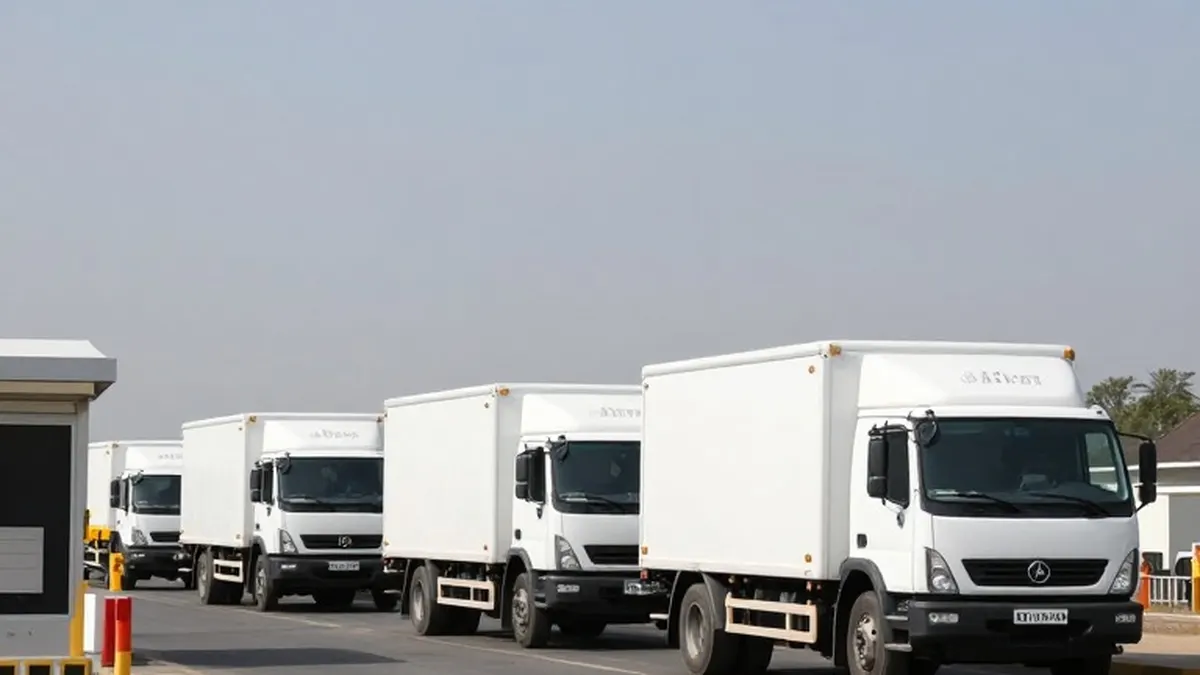
Beginning on Wednesday, a daily routine of security screening for humanitarian aid will commence at the Erez Border Crossing. Under the new arrangement, twenty trucks carrying assistance for the Gaza Strip will arrive at the site every day to undergo inspections before proceeding.
This development marks a shift from previous statements made by Israeli leadership. In August, Defense Minister Israel Katz and Prime Minister Benjamin Netanyahu indicated that there were no immediate plans to open the Erez crossing for general use. At that time, Katz had reassured local residents that trucks would not be permitted to travel through the crossing if doing so would negatively impact the surrounding communities.
Clarifications provided regarding the new plan emphasize that the crossing is not being fully opened for the passage of goods. Instead, the site is being utilized strictly as a security checkpoint. The trucks are brought to the location for verification and safety checks rather than to pass through as part of a broader trade route.
Despite these clarifications, local communities have voiced strong opposition to the decision. The Hof Askelon Regional Council has warned that the increased movement of heavy vehicles could lead to significant traffic congestion and security challenges for the area.
Residents have expressed specific concern over the use of the region's narrow roads by large convoys. These routes are regularly used by local community members and schoolchildren, raising fears about the safety of pedestrians and drivers alike. Local media outlet N12 reported that residents believe this decision will once again affect those who suffered the most during the events of October 7.
Defense Minister Katz has previously detailed the logistical constraints of the operation. He specified that the crossing would not open for the passage of goods, even if preparatory measures such as the installation of metal detectors had been completed. Katz stated that there would be no movement of goods without the demilitarization of the Gaza Strip. He further noted that if the security measures installed at Erez to support operations at Kerem Shalom harmed the residents of Netiv Ha'asara, the plan would not proceed.
Itamar Revivo, head of the Hof Ashkelon Regional Council, argued that the plan poses risks even if the trucks are currently only arriving for inspection. He described the situation as unacceptable, noting that convoys of heavy trucks are traveling near communities on narrow and dangerous roads that were not designed to handle such intensive traffic.
Revivo emphasized that the state's primary responsibility is to ensure the safety of its citizens. He stated that the council would not agree to meeting the needs of adversaries at the expense of the security and well-being of local residents. The council leader called on authorities to reconsider the implications of the new protocol and demanded that the regional council be consulted before any decisions are made that directly affect the lives of residents.