Iranian officials dispute military purpose of dams after media report
A New York Times investigation has sparked debate in Iran over whether the country's extensive dam network serves a dual purpose for underground missile facilities.
By Andres Henderson ·
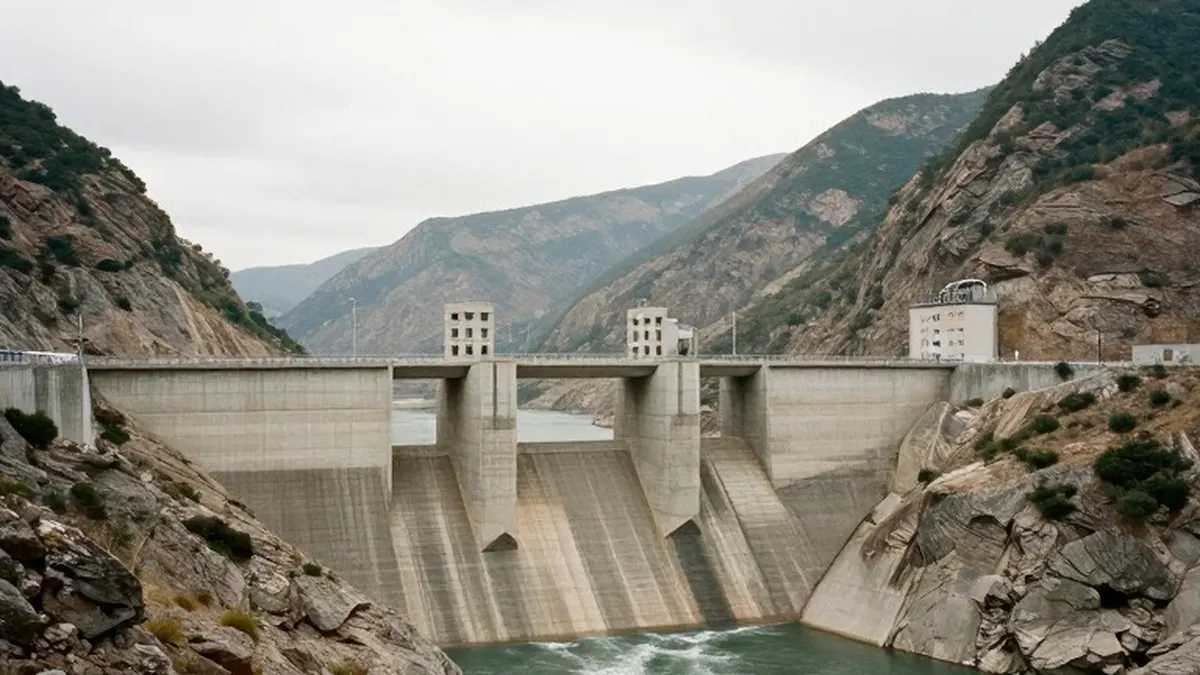
Mohammad Bagher Ghalibaf, the Speaker of the Iranian Parliament, has raised concerns regarding the potential military targeting of Iran's dam infrastructure. On November 17, he shared a link to a New York Times article that examines the relationship between Iran's water projects and its underground military sites. The report suggests that some dams may have been constructed to supply water and power to these strategic installations, a claim that has intensified fears of a new conflict involving civilian infrastructure.
Ghalibaf, a senior regime official who survived previous strikes earlier in the year, used social media to criticize the perceived logic behind targeting such sites. He argued that the United States and Israel are preparing to treat dams, ports, and power plants near their own bases as dual-use targets. He stated that Iran would apply the same consistent and even-handed logic in future engagements.
The original article, written by Sanam Mahoozi and Erika Solomon, poses the question of why Iran continues to expand its dam and water-transfer projects despite an ongoing water crisis. The authors highlight an intriguing overlap between these civilian water projects and military sites. While they note there is no conclusive evidence that the dams were built for military support, they suggest the proximity warrants further inquiry into whether water projects have aided Iran's military buildup.
The story has generated significant commentary over the past day, with various experts and officials weighing in on the validity of the claims. Esfandyar Batmanghelidj, the founder and CEO of the Bourse & Bazaar Foundation, expressed confusion over the narrative. He pointed out that fewer than fifty of Iran's more than five hundred large dams have turbines installed for electricity generation. He argued that the idea that hundreds of dams were built primarily to power military facilities is difficult to sustain based on the available facts.
Batmanghelidj further contended that the high number of dams in Iran is often driven by vested interests, particularly construction companies linked to the Islamic Revolutionary Guard Corps. He compared this to other nations, such as China, which has built numerous dams that may not be strictly necessary for utility purposes. He also noted that dams are inherently easy targets because they are frequently located in mountainous regions, which is where many military sites are also situated. This geographic correlation, he argued, does not necessarily prove a direct military function for the water infrastructure.
Danny Citrinowicz, a Middle East and national security expert, offered a different perspective on the strategic implications. He observed that Tehran has invested heavily in underground facilities, redundancy, and decentralization to ensure missile operations continue even if civilian infrastructure is disrupted. He noted that while the direct link between specific dam projects and underground missile facilities is not conclusively established, the approach fits well with Iran's broader strategic thinking regarding independent water and electricity supplies.
Other analysts have cautioned against using the media report as immediate justification for attacks on civilian water infrastructure. Mohammad Ali Shabani, an editor at Amwaj Media, suggested that the current framing could be seen as manufacturing consent for bombing dams. Nima Shokri, a professor at the Hamburg University of Technology, clarified that the proximity of dams to military targets does not explain why those dams were built, nor does it automatically justify attacks on them.
Sina Toossi, a senior non-resident fellow at the Center for International Policy, described the connection as speculative. He emphasized that the investigation does not prove that specific dams were constructed for military purposes, noting that many serve essential civilian needs such as water supply, irrigation, and electricity. As the debate continues, it remains to be seen whether Iran's dam infrastructure will become a primary target in future conflicts or if the spotlight will gradually fade.
The controversy highlights the complex intersection of Iran's civilian development projects and its military strategy. While the New York Times article has opened a window into these potential dual-use capabilities, experts remain divided on the extent to which dams should be viewed as legitimate military objectives. The discussion underscores the ongoing tension between strategic military planning and the protection of critical civilian infrastructure in the region.