Fourth Graders Unearth Ancient Coin During Jerusalem Hills Excursion
Three fourth-grade students discovered an ancient coin potentially dating to the Roman era during a school trip to the Jerusalem Hills.
By Luca Fernandez ·
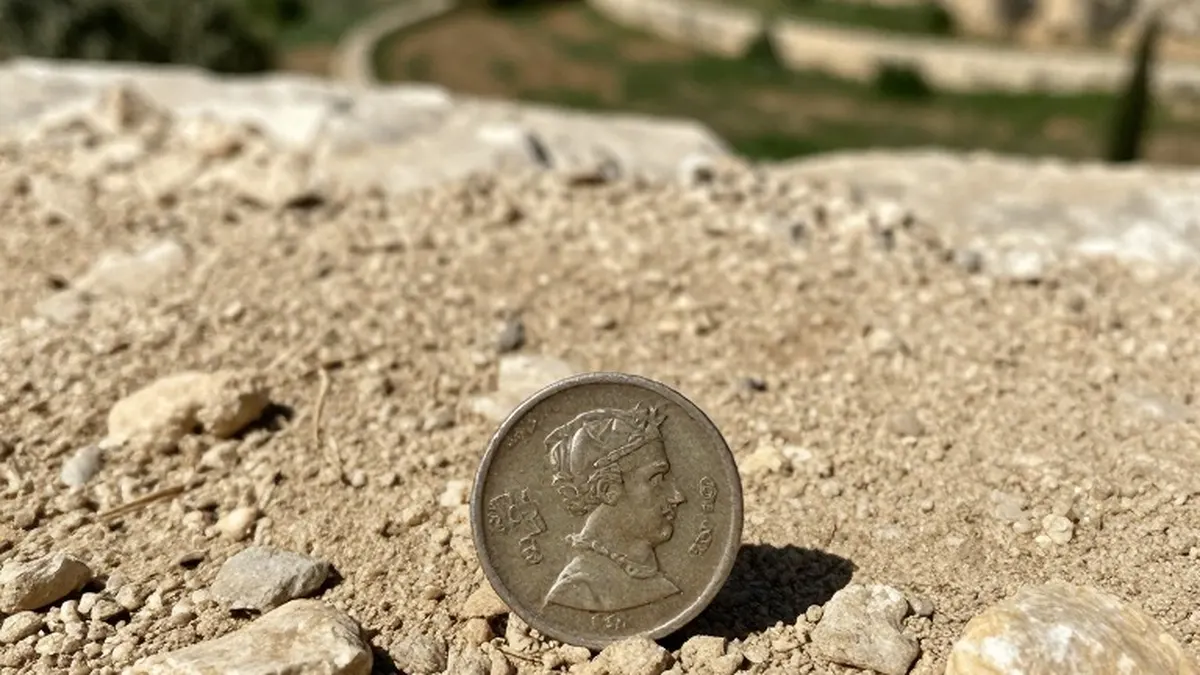
Three fourth-grade students, all ten years old, made a significant archaeological discovery on Sunday while participating in a school trip to the Jerusalem Hills. The group was exploring the Sataf area, specifically on an agricultural terrace located between Ein Bikura and Ein Sataf, when they stumbled upon an ancient coin. The artifact is believed to be approximately 1,900 years old, potentially dating back to the era of Roman rule in the Land of Israel.
The students were engaging with an air blower during their field activities when they spotted the object. They immediately reported their find to their homeroom teacher, who then notified Amit Feinstein, the tour guide leading the excursion. Feinstein is also a student at Bar-Ilan University, studying in the Department of Land of Israel Studies and Archaeology.
Upon seeing the coin, Feinstein suspected it originated from the Roman period. Because he is not a specialist in numismatics, the study of coins, he photographed the item and sent the images to his university lecturers for a preliminary assessment. The academics initially suggested the coin could be from either the Roman or the Byzantine era.
Further consultation with the Israel Antiquities Authority, known as the IAA, introduced a more specific possibility. The IAA's preliminary evaluation indicates that the coin may have been minted during the reign of Roman Emperor Hadrian. Hadrian ruled from 117 to 138 CE and is historically noted for suppressing the Bar Kokhba Revolt. If this identification is confirmed, the artifact would be nearly 1,900 years old.
The IAA emphasized that a definitive conclusion cannot be reached until the coin undergoes a professional examination. The object is currently awaiting this detailed analysis, which is expected to provide clarity on its exact origin and age.
The discovery also served as a practical lesson in antiquities law for the young explorers. Feinstein explained to the children that archaeological finds are not merely souvenirs to be kept. He stressed the importance of reporting discoveries to the IAA to ensure they are properly examined, documented, and preserved by professionals.
According to Feinstein, the student who initially picked up the coin was reluctant to part with it, viewing it as a personal treasure. However, after a discussion about the value of preservation and archaeological research, the students agreed to hand the coin over to the school principal. Feinstein simultaneously reported the find to the IAA.
Feinstein noted that while he tried to engage the students with the history of ancient agricultural methods at Sataf, their interest truly peaked only when the coin was found. He recalled that their eyes lit up, and they began asking numerous questions about their ancestors.
The enthusiasm spread throughout the school community. The staff was equally excited about the find, prompting the school principal to organize a discussion with the entire grade. This session focused on the laws governing antiquities and the necessity of submitting archaeological finds to the IAA.
For the three students, the event has already become a memorable encounter with history. What began as a simple game on an agricultural terrace resulted in a potential link to the distant past, illustrating how history can be found in the most unexpected places.