Trump Heads to Philippines Amidst Regional Tensions and Protests
The US president arrives in Manila for a high-stakes Asia tour featuring Quad talks, APEC, and a trilateral meeting with China and Russia.
By Luca Fernandez ·
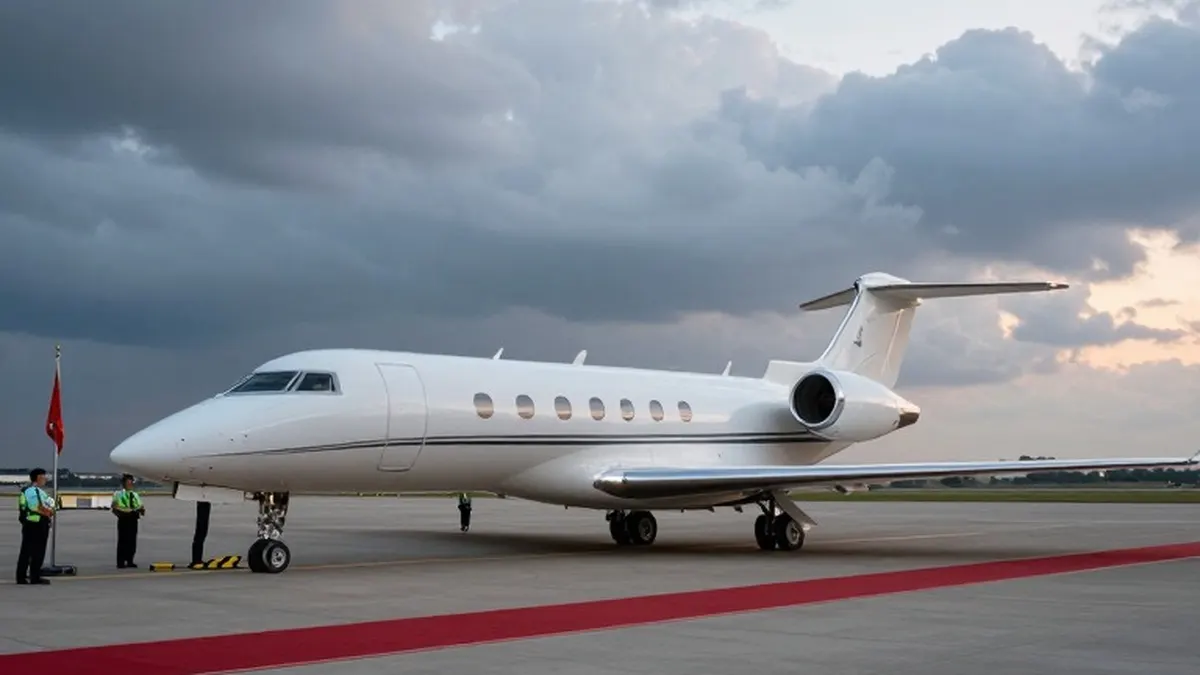
US President Donald Trump arrived in the Philippines on Tuesday, marking the first stop of his extensive diplomatic tour of Asia. The visit coincides with the conclusion of a Southeast Asian summit, where the leader faces potential public demonstrations before convening the first meeting of the Quad group of Indo-Pacific nations in two years.
This leg of the trip includes participation in the Asia-Pacific Economic Cooperation forum in Shenzhen and a highly anticipated trilateral discussion with Chinese and Russian counterparts. The itinerary unfolds following a defeat for the Republican Party in recent midterm elections and amid spy allegations that threaten the fragile trade-war truce between Washington and Beijing.
Tensions in Manila have been rising, with days of protests preceding the president's arrival. Demonstrators have burned effigies of the president and called for an end to the Middle East war. They have also demanded the scrapping of the US-led Pax Silica initiative, signaling a charged atmosphere for his visit.
The upcoming Quad meeting, which includes the US, Japan, Australia, and India, represents a significant diplomatic event. It marks Trump's first chairing of the group, which his predecessor Joe Biden had championed as a key foreign policy priority. The gathering comes just before the APEC summit hosted by Chinese President Xi Jinping, who has historically viewed the Quad as an effort to encircle Beijing, although members maintain the grouping is not targeted at any single country.
At the Association of Southeast Asian Nations summit on Monday, Chinese Premier Li Qiang praised the economic achievements of China and the ASEAN bloc. He emphasized a commitment to free trade despite global restrictions, urging nations to stand united and ward off interference. While China remains the region's largest trading partner, major ASEAN economies seek to strengthen ties with the US amid ongoing diplomatic and trade uncertainties.
Former US Deputy Secretary of State Kurt Campbell attributed the decision to reconvene the Quad to Washington's top diplomat, Marco Rubio. Campbell noted that the group had lost some ambition under the current administration. He described the meeting as the best possible signal before entering the trilateral talks with China and Russia on Thursday.
Campbell highlighted the critical nature of the US-Japan relationship, stating that a perception that it is not a top priority for the president would be concerning. White House spokesperson Olivia Wales affirmed on Friday that the Quad has become a partnership of action under Trump's leadership, focused on tackling regional challenges and ensuring a free and open Indo-Pacific.
A Japanese foreign ministry official indicated that leaders would aim to demonstrate unity on issues such as maritime security, export restrictions, and supply chain diversification for critical minerals and AI. Before Trump's arrival, ASEAN held meetings with leaders from Japan, South Korea, China, and India in preparation for the annual East Asia Summit.
Although Trump will skip the main East Asia Summit, he will participate in a US-ASEAN Special Summit and meet with Philippine President Ferdinand Marcos Jr on Wednesday. The Philippines is a key US defense ally in the region. Additionally, the president is expected to hold talks with Thai Prime Minister Anutin Charnvirakul on Tuesday, with a joint statement anticipated regarding negotiations on a reciprocal trade agreement.
The economic stakes are significant for regional partners. The US is currently Thailand's largest export market, accounting for 24% of its total shipments this year. This relationship is further underscored by the US designation of Thailand as a major non-NATO ally in 2003.