Czech Ambassador Highlights Value of Direct Visits for UN Diplomats
A delegation of over 20 UN ambassadors toured Israel and Gaza this week, an experience diplomats say helps them understand the complex realities on the ground.
By Luca Fernandez ·
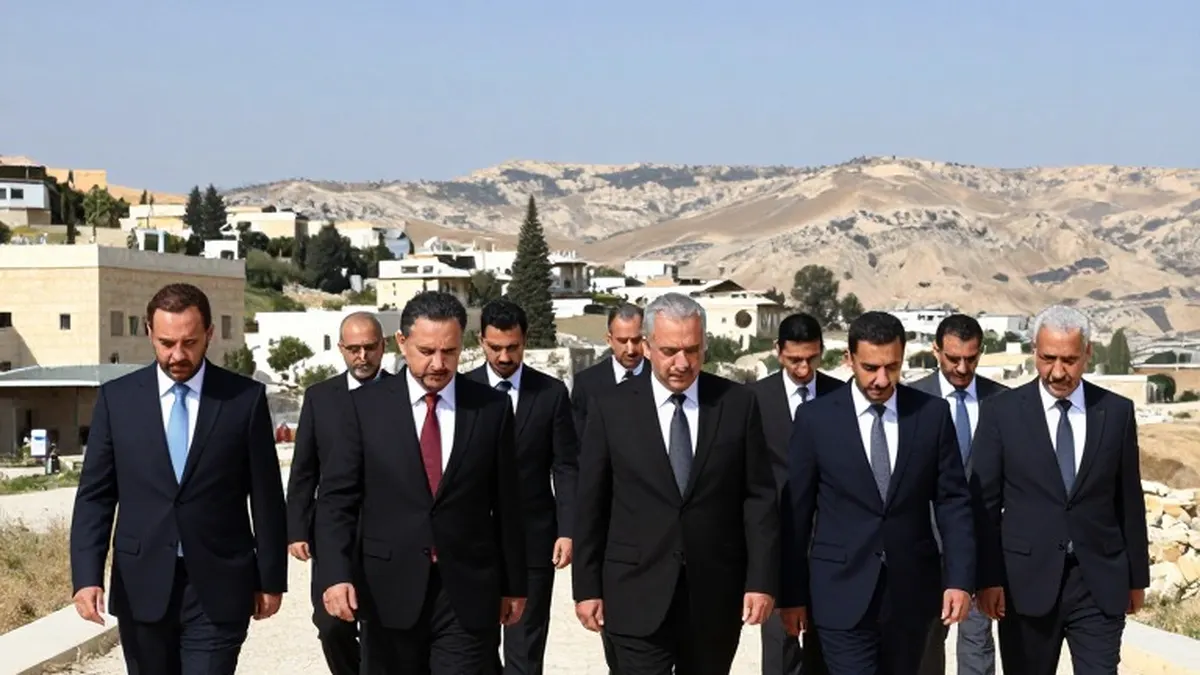
Ambassadors from more than 20 countries participated in a diplomatic tour of Israel and Gaza this week, a move designed to provide UN representatives with a firsthand look at the regional conflict. Hynek Kmonicek, the Czech Republic's Permanent Representative to the United Nations in New York, described the trip as a vital opportunity for diplomats to move beyond written reports and observe the actual conditions in the region.
Kmonicek emphasized that the visit allows officials who will eventually vote on Israel at the UN to see the people behind the paperwork. He noted that witnessing the dangers, pain, and specific challenges facing Israel helps diplomats better understand their responsibilities in New York. This perspective is particularly important given that many diplomats spend most of their time at UN headquarters, far from the geopolitical hotspots where their decisions will have the most impact.
Israel's Ambassador to the UN, Danny Danon, welcomed the group to the Golan Heights, specifically taking them to the Druze town of Majdal Shams. Danon stated that while this was not the first delegation of its kind, each visit offers new insights. He pointed out that the ambassadors had recently visited Gaza, where they observed a Hamas tunnel located near the Yellow Line, gaining a clearer understanding of the extensive underground infrastructure built by the group.
The timing of the visit coincides with significant developments in the region. A US and UN-backed plan for Gaza is currently awaiting Hamas's disarmament, while a similar process is underway in Lebanon involving Hezbollah and the Lebanese army. The mandate for the United Nations Interim Force in Lebanon, or UNIFIL, is set to conclude at the end of 2027, prompting discussions about the security landscape that will follow the peacekeeping mission's departure.
Danon used the visit to highlight Israel's peaceful nature and the proximity of its border communities to neighboring states. He cited the ambassador from Trinidad and Tobago as an example, noting that although the country is small and perhaps less known in Israel, its representative will soon serve on the Security Council. Seeing the border villages firsthand helps such diplomats grasp the immediate challenges related to Lebanon, Syria, and Gaza.
Kmonicek shared that the close proximity of communities in the region surprised the visiting diplomats. He described Israel as a small nation composed of diverse religions and ethnicities, where nothing is geographically distant. He stressed that as the UNIFIL mandate nears its end, the primary goal must be to ensure that the area remains livable and secure, a concern that is frequently debated at the UN.
The delegation also inspected the Syrian border, where Israel has established a buffer zone and controls the peak of Mount Hermon since the fall of the Assad regime. Kmonicek, who is familiar with Syria, expressed cautious optimism about the recent positive developments. He noted that while trust in the changes is still building, he is willing to give the current situation the benefit of the doubt that it differs from the past.
The diplomatic tour formed part of a broader week of engagement between Israel and the Czech Republic. Prime Minister Benjamin Netanyahu met with Czech Prime Minister Andrej Babiš on November 16, followed by expanded meetings involving ministers from both nations. President Isaac Herzog hosted the Czech delegation on November 17, underscoring the historic affection between the two peoples.
Kmonicek highlighted the strong ties between the two countries, referencing the historical support Czechoslovakia provided to the newly established Israel Defense Forces. Today, the relationship is characterized by mutual trade, tourism, and potential for deeper defense cooperation. He noted that while the Czech defense industry is currently restructuring due to the conflict in Ukraine, there is significant interest in air defense systems, a trend seen across Europe with recent acquisitions by Germany, Greece, and Romania.