Garment worker protests disrupt Bangladesh as wage talks stall
Violent clashes in Dhaka and Mymensingh have halted production in the country's second-largest industry, with workers demanding a significant pay raise.
By Idris Ricci ·
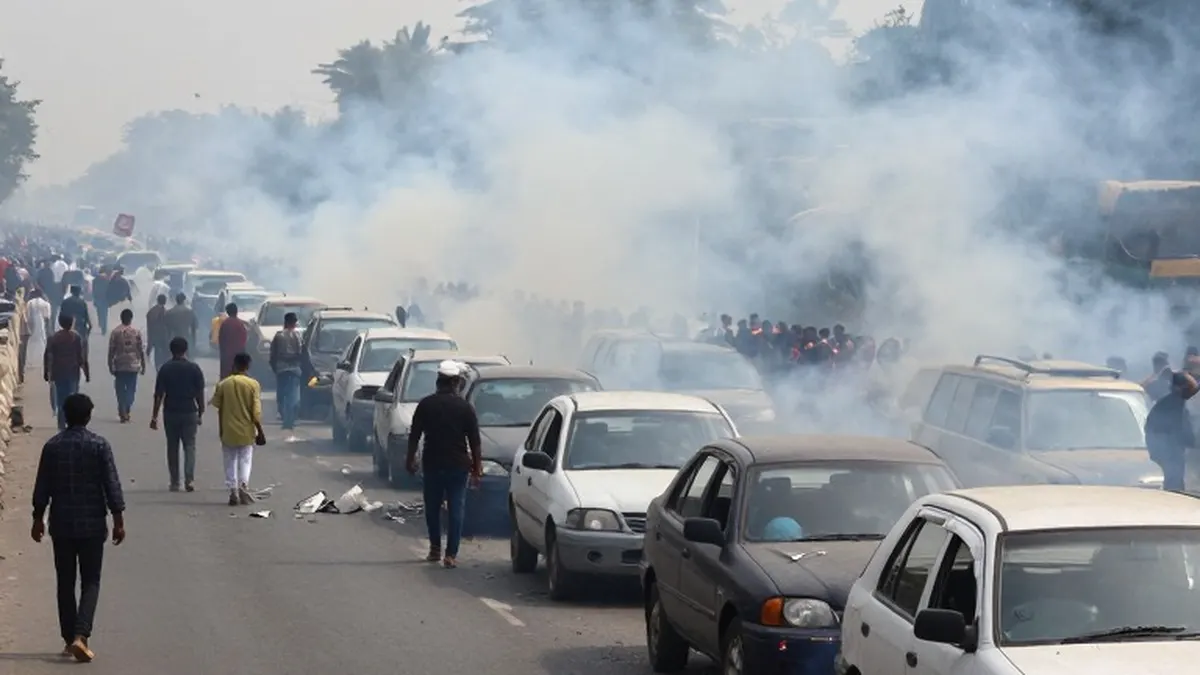
Bangladesh police deployed tear gas and stun grenades to disperse thousands of garment workers on Tuesday. The crowd had gathered in protest after a critical meeting of the national wage board was unexpectedly postponed. The disruption highlights the growing tension within the country's manufacturing sector.
Protesters in the streets hurled bricks at law enforcement and set vehicles on fire. Demonstrators also blocked the primary highway connecting the capital, Dhaka, to the financial district of Mymensingh. The scene of unrest underscored the intensity of the workers' dissatisfaction with the current pay structure.
The garment industry is a cornerstone of the Bangladeshi economy, ranking as the world's second-largest exporter behind China. Major international brands, including Fruit of the Loom and Levi Strauss, source their clothing from these factories. However, the sector, which employs more than four million people and generates $38 billion annually, is facing its most significant unrest in recent years.
The current wave of demonstrations began last month and has since escalated. Workers are demanding a minimum monthly wage of 30,000 taka, which is approximately $240. This proposed figure represents a 140 percent increase over the current minimum of 12,500 taka. Employees argue that the hike is necessary to keep pace with rising costs for food, housing, transportation, and healthcare.
According to sources speaking to the AFP news agency, roughly 500 of the country's 4,500 garment factories have ceased operations. This shutdown has further fueled anxiety among the workforce. A specific provision in the country's labor laws allows factory owners to suspend operations and withhold wages when production is disrupted, a clause often referred to as no work, no pay.
One worker named Khanom, who is 24 years old, expressed frustration with the pace of negotiations. She told AFP that the owners appear unwilling to meet the salary demands and are dragging their feet. The uncertainty has left many employees feeling that their voices are not being adequately heard by the negotiating bodies.
Tensions remained high in the industrial hubs of Savar and Ashulia, which are located on the outskirts of Dhaka. The government established the wage board earlier this month to facilitate negotiations between employers and workers regarding the pay rise. The new minimum wage is scheduled to be announced in December and will take effect in January of next year.
Another worker, Rakib, 28, stated that the team wants to return to their machines as soon as possible. He expressed concern that the wage board members might not be fully aware of the workers' specific demands. Rakib noted that most factories had opened on Tuesday morning but were forced to shut down again as the protests spread to the highway.
In response to the delays, the Bangladesh Garment Manufacturers and Exporters Association and the Bangladesh Knitwear Manufacturers and Exporters Association issued a joint statement. The groups called for the resumption of wage negotiations as soon as possible to stabilize the industry. The original meeting scheduled for Monday was postponed after a worker representative cited illness.
The next session of the wage board is set for November 23. Following Tuesday's demonstrations, the Border Guard Bangladesh stepped up patrols across the industrial zone, deploying hundreds of personnel. The force stated that its headquarters is closely monitoring the situation from a dedicated cell. They are utilizing drones, body-worn cameras, and other devices to maintain a close watch on the ongoing demonstrations.