Documentary follows American volunteers in Gaza's Nasser hospital
A new film by director Poh Si Teng captures the intense experiences of three US doctors volunteering in Gaza, highlighting the camaraderie and devastation within the Nasser hospital.
By Idris Ricci ·
A new documentary has emerged that offers a raw and powerful perspective on the medical efforts taking place in Palestine. The film, directed by Poh Si Teng, focuses on the experiences of American doctors who traveled to the region to treat civilian casualties. It is described as an angry and despairing piece, reflecting the scale of suffering and destruction observed on the ground. However, the narrative also highlights a sense of hope through the actions of three specific medical professionals who acted on their conscience.
Director Poh Si Teng made significant personal sacrifices to bring this project to life. She left her position at ABC News and used her personal savings to finance the production. The documentary follows three American doctors who signed up to volunteer at the Nasser hospital in southern Gaza in early 2025. Their mission was to provide critical care in a high-intensity conflict zone.
The group included Dr. Thaer Ahmad, an emergency room doctor of Palestinian heritage from Chicago. However, Ahmad was refused entry into Gaza the night before the group was scheduled to cross the border. Consequently, the remaining two doctors completed the mission. They were Dr. Feroze Sidhwa, a trauma surgeon, and Dr. Mark Perlmutter, a Jewish American orthopedic surgeon. Neither of these two doctors was new to the region, having previously worked in Gaza.
Preparations for the trip were meticulous, particularly for Dr. Perlmutter. Knowing the challenges at the border, he packed antibiotics into numerous small plastic bags hidden throughout his luggage. This strategy was designed to ensure that if he was turned back, he might still be able to get some of the life-saving medication through. Given the high mortality rate among medical workers during the war, Perlmutter also took the precaution of drafting a will before departing.
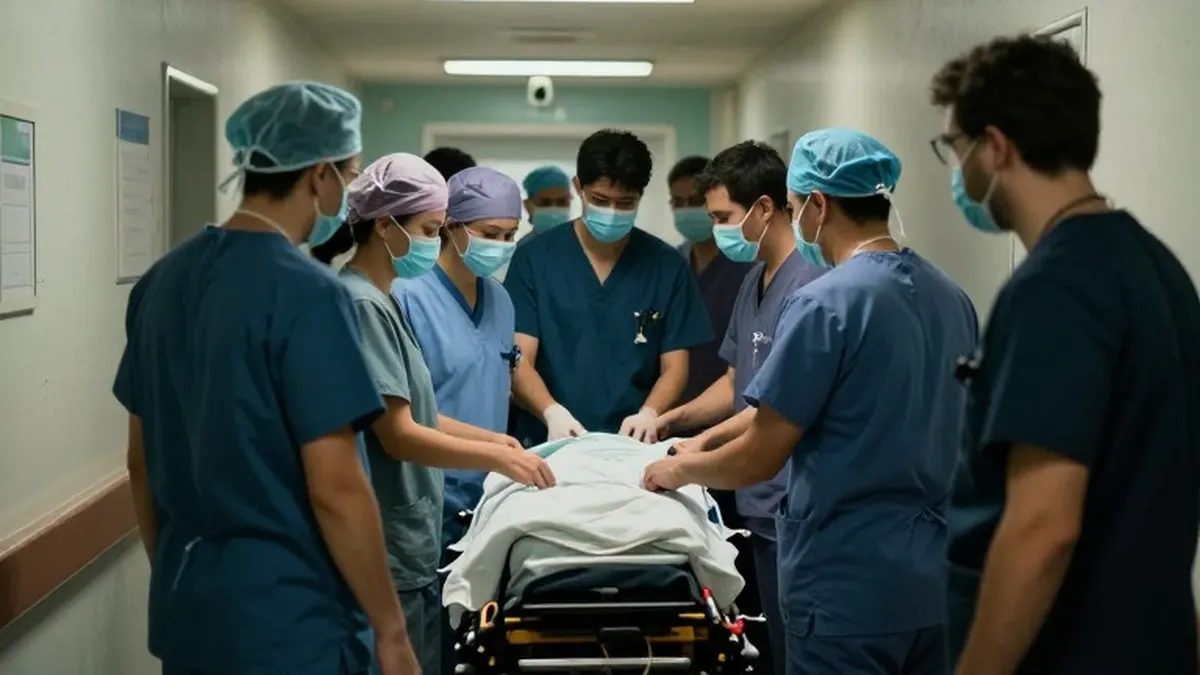
Inside the Nasser hospital, the film captures a strong sense of camaraderie among medical staff from various nationalities. The doctors are shown bantering with one another, using good-natured jibes as a universal language of solidarity. This atmosphere of teamwork stands in contrast to the harsh realities they face, such as mass casualty events where pain medication is often scarce for patients with severe injuries like blown-off limbs.
The three doctors eventually found themselves in the public spotlight. They began advocating for Palestine through appearances on podcasts, television news programs, and in the corridors of Washington DC. Their visibility helped bring attention to the conditions within the hospital and the broader crisis in the region.
When their time at the hospital came to an end, both Perlmutter and Sidhwa reported feeling a sense of guilt about returning to their normal lives. This emotional weight underscores the deep impact of their work and the difficult choice of leaving the patients and their colleagues behind.
The Nasser hospital has been a frequent target during the conflict. Since the start of the war, the facility has been attacked seven times. The documentary cameras were present to witness one of these strikes. The most recent Israeli airstrike occurred just last week, resulting in the death of one of the Palestinian doctors featured in the film, surgeon Rizk Abu Shaira. He was among six reported fatalities in that incident.
The film serves as a testament to the dedication of international medical volunteers and the resilience of local healthcare workers. It provides a detailed look at the logistical challenges, emotional toll, and physical dangers faced by those on the front lines of the medical response in Gaza.